
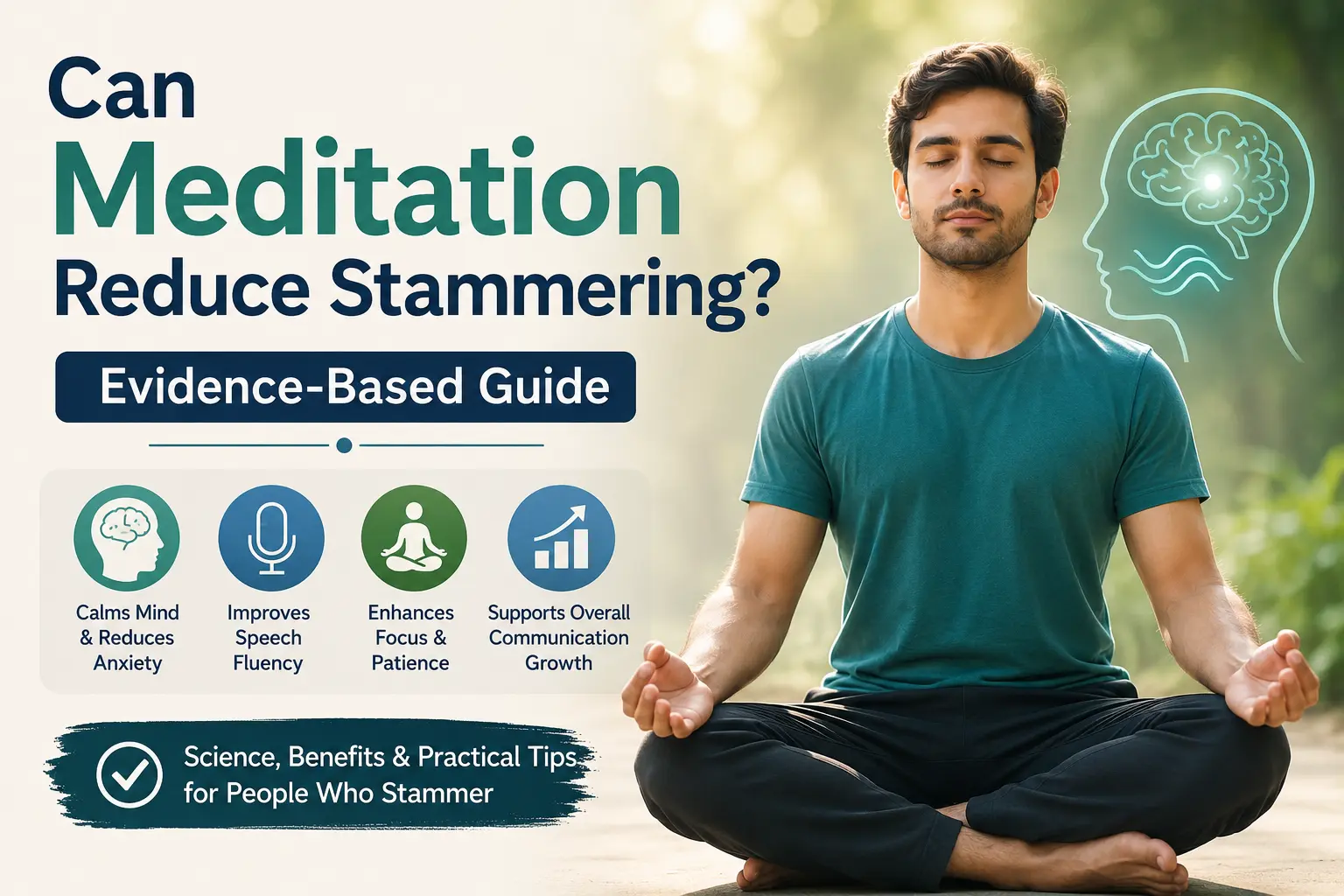
Can Meditation Reduce Stammering? Evidence-Based Guide
If you stammer, chances are someone has told you to “just relax” at some point in your life. Maybe it was a teacher, a relative, or even a well-meaning friend. While those comments often come from a place of kindness, they can feel frustrating because stammering is much more complex than simply being nervous.
Still, there is one question that keeps coming up in conversations about speech fluency: Can meditation reduce stammering? It’s a fair question, especially when so many people who stammer notice that stress, anxiety, and emotional pressure can make speaking more difficult.
The short answer is this: meditation is not a cure for stammering, but it may help some people manage the emotional and mental aspects that often accompany it. And that, in itself, can make a meaningful difference.
As someone who has worked closely with people who stammer, I’ve seen how the fear of speaking can sometimes become even more overwhelming than the stammer itself. The racing thoughts before introducing yourself. The tension in your chest during meetings. The constant anticipation of getting stuck on certain words. These experiences are real, and they deserve attention.
Meditation has been studied extensively for its effects on stress reduction, emotional regulation, and overall well-being. While research specifically focused on meditation and stammering is still limited, there is growing evidence suggesting that mindfulness practices can support individuals who struggle with speech-related anxiety.
Before going any further, it’s important to understand that stammering is considered a neurodevelopmental condition. It is not caused by nervousness, weak character, or lack of confidence. However, emotional factors can influence the severity of stammering episodes. This is where meditation may have a role to play.
People who meditate regularly often report feeling calmer and more aware of their thoughts without immediately reacting to them. Imagine having a difficult speaking situation ahead of you. Instead of spiraling into thoughts like, “What if I stammer?” or “Everyone will judge me,” meditation may help you observe those thoughts without letting them completely take over.
Interestingly, several studies have shown that mindfulness-based interventions can reduce symptoms of social anxiety. Since many adults who stammer experience heightened anxiety in speaking situations, improving emotional resilience could indirectly support more comfortable communication experiences.
That doesn’t mean meditation will suddenly eliminate blocks, repetitions, or prolongations. If anyone promises you that a five-minute breathing exercise will permanently stop stammering, it’s worth approaching such claims with caution.
What meditation may offer is something different. It can help reduce the struggle around stammering.
For years, many people who stammer develop habits aimed at avoiding difficult words, escaping conversations, or hiding their speech differences. Over time, these coping strategies can create even more tension. Meditation encourages acceptance and present-moment awareness, which may soften some of that internal resistance.
I remember speaking with one individual who described meditation as “finally giving my mind somewhere to rest.” He still stammered occasionally, but he no longer spent hours replaying every conversation in his head. That shift alone improved his quality of life.
So, can meditation reduce stammering in a direct sense? Current evidence suggests the answer is probably not in terms of completely removing speech disruptions. But if we broaden the question slightly, meditation may reduce the stress, shame, and anticipatory fear that often surround stammering experiences.
Different forms of meditation exist, and not all approaches resonate with everyone. Mindfulness meditation, which involves paying attention to the present moment without judgment, has received considerable research attention. Loving-kindness meditation focuses on developing compassion toward oneself and others. Guided meditation uses verbal instructions to support relaxation and awareness.
Some people who stammer find simple breathing exercises particularly helpful before presentations or phone calls. Others prefer body scan meditations that help release physical tension stored in the shoulders, jaw, and chest.
The key is consistency rather than perfection.
Many beginners assume meditation requires clearing the mind completely. In reality, meditation involves noticing when the mind wanders and gently bringing attention back to the chosen focus point. Ironically, learning not to fight every intrusive thought can become a valuable lesson for people who have spent years fighting against their speech.
At StammeringCare.com, we often emphasize that effective stammering support should address both speech mechanics and emotional well-being. Techniques targeting breathing, acceptance, confidence-building, and communication skills can work together rather than competing against one another.
Meditation should not replace professional guidance from qualified speech-language therapists. Instead, it can serve as a complementary practice within a broader approach to managing stammering.
If you’re curious about trying meditation, start small. Even five minutes a day can be enough to build familiarity with the practice. Choose a quiet space, sit comfortably, and focus gently on your breathing. When thoughts about speaking difficulties arise, notice them without criticism and return your attention to the breath.
It might feel awkward initially. That’s completely normal.
In today’s fast-paced world, many of us aren’t accustomed to sitting quietly with ourselves. Give yourself permission to be a beginner.
Over time, some individuals notice they become less reactive during challenging conversations. They may still experience moments of stammering, but they recover more quickly emotionally. They stop interpreting every speech disruption as evidence of failure.
That change in perspective matters more than people often realize.
The relationship between stammering and mental health is complex. Years of negative speaking experiences can affect self-esteem and increase anxiety levels. Addressing emotional health isn’t a sign of weakness; it’s part of caring for the whole person.
If you’re looking for practical strategies and encouragement from someone who understands the lived experience of stammering, you can also explore the resources available on my YouTube channel: https://www.youtube.com/@wasimanwar_StammeringCoach/videos. Many people find reassurance simply by realizing they are not alone in what they experience.
Returning to our original question, can meditation reduce stammering? The evidence indicates that meditation may not eliminate stammering itself, but it can positively influence the emotional landscape surrounding communication. Reduced stress, improved self-awareness, and greater self-compassion are outcomes that deserve recognition.
And perhaps that’s the point.
Sometimes progress isn’t measured by speaking perfectly. Sometimes it’s measured by raising your hand despite uncertainty, making that phone call you had been avoiding, or introducing yourself without apologizing for how you speak.
Meditation won’t transform you into someone else. It won’t erase your experiences or magically remove every block.
But it might help you meet those moments with a little less fear and a little more kindness toward yourself.
For many people who stammer, that’s not a small thing at all.
If you decide to explore meditation, approach it with curiosity rather than expectation. Notice what changes and what stays the same. Give yourself time. Healing, growth, and confidence rarely follow a straight line.
Most importantly, remember that your worth has never depended on perfect fluency.
Whether your speech is smooth today or filled with interruptions, your voice still matters. You still deserve to participate fully in conversations, relationships, opportunities, and dreams.
And maybe, just maybe, meditation can help you believe that a little more deeply each day.


