
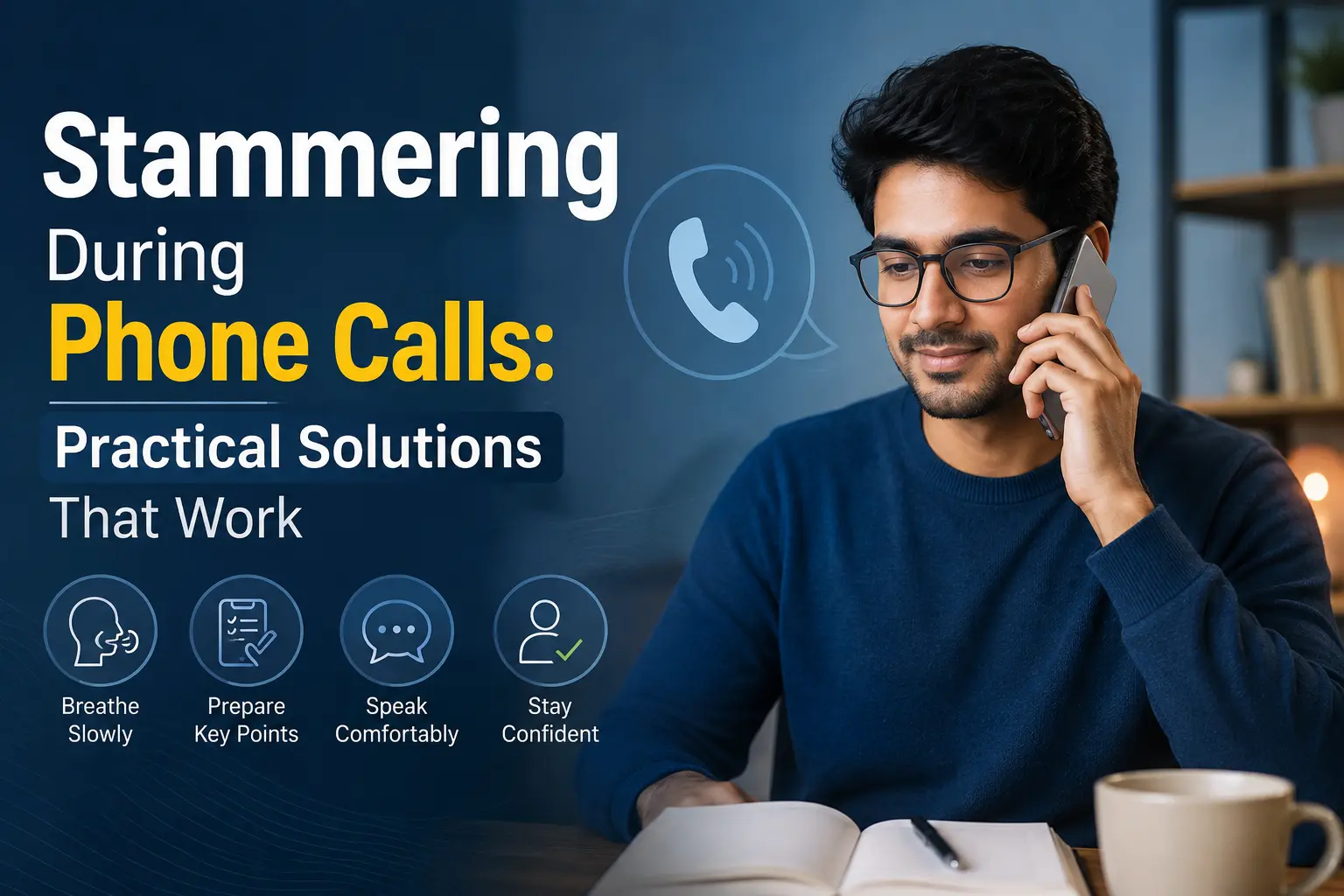
Stammering During Phone Calls: Practical Solutions That Work
Last week a guy called me — well, he actually cancelled the call three times before he finally went through with it. When we finally spoke, he said, “Wasim bhai, I know how to talk, but the moment I pick up the phone, everything just falls apart.” And honestly, this isn’t a one-off case. A lot of people who manage fairly well speaking face-to-face suddenly find their stammering getting worse the second they’re on a call. Today we’re going to talk about exactly this — why stammering during phone calls tends to increase, and what can actually be done to improve it.
Let’s first understand why phone calls make stammering feel more intense. When we’re talking face-to-face, we can use body language, show expressions, take a small pause, and the other person can visually see that we’re trying to say something. But all of that disappears on a phone call. Voice becomes the only medium of communication, and that itself creates extra pressure in the mind — “I have to make everything clear using just my voice.” That pressure is often what triggers stammering or makes it worse.
Another important point is that on a call, we have no idea how the other person is reacting. When we can’t see someone, our mind automatically starts making negative assumptions — “maybe they’re laughing at me,” “maybe they’re getting frustrated.” This anticipatory anxiety often does more damage than the actual stammering itself, because we’re already tense before we’ve even started speaking.
Now let’s talk about some practical solutions that genuinely work. The first and most effective one is preparing yourself mentally before the call. If you know you have to call someone — whether it’s for work or a family member — take two or three deep breaths beforehand. Remind yourself there’s no rush to speak quickly. This small mental preparation makes a real difference, because it calms your nervous system down even before the call begins.
The second technique is to slow things down right at the start of the call. Many people rush to get their first sentence out, and that’s exactly where they stammer the most. Instead, after saying “Hello,” take a small pause before continuing. That pause gives you the first bit of control, and gradually your confidence builds for the rest of the call too.
I’ve spoken about this topic in detail on my YouTube channel as well — at https://www.youtube.com/@wasimanwar_StammeringCoach/videos I’ve shared several real-life examples of people learning to manage their stammering during phone calls. If you want to see how these techniques are actually applied, you’ll find practical demonstrations there.
Another thing that works well for a lot of people is making a small mental or written outline of what you need to say before the call. This way you don’t have to think about “what to say next,” and your full focus stays on speaking rather than on content. This is especially helpful for important calls — like a job interview or customer service call — where thinking through your key points in advance really helps.
Some people ask me if texting is a better option than calling. Honestly, it might feel comfortable in the short term, but if you keep avoiding calls altogether, phone-related anxiety won’t reduce — it’ll only grow. Instead, I’d suggest starting with small, low-pressure calls — like calling a friend, or booking a table at a restaurant. These low-stakes calls will gradually build your confidence, and then you’ll be more ready for bigger calls.
Breathing also plays a huge role during phone calls. When we’re nervous, our breathing becomes shallow, which reduces our control over speech. If you pay a little attention to your breathing before and during the call — keeping it slow and deep — it keeps your entire nervous system relaxed, which also reduces the intensity of stammering.
One thing I always tell my clients — if you do stammer on a call, there’s no need to keep apologizing for it. Just pause, take a breath, and move forward. The more you apologize or try to explain, the more you focus on that moment, and the stammering can actually get worse. That’s why acceptance is the most powerful tool here — accept your stammering as it is, instead of fighting against it.
At StammeringCare.com, we work on exactly this kind of practical, real-life strategy — whether it’s phone calls, interviews, or presentations. Because every situation has its own unique challenges, and generic advice simply doesn’t cut it. If you feel like you need structured guidance that isn’t just theory but something you can apply in daily life, do visit our website.
Technology can help too. If you’re feeling very nervous before an important call, you can record a voice note or write out some notes and practice speaking them out loud, as if you’re actually on the call. This kind of rehearsal makes your mind more familiar with the actual call, which reduces anxiety.
And lastly, the most important thing — be patient with yourself. Improvement with phone calls doesn’t happen overnight, it’s a gradual process. Every call where you feel even a little more confident, whether you stammer or not, is a small win. Celebrate that, and don’t judge yourself if a call happens to be difficult sometimes.
So if you’re also struggling with stammering during phone calls, remember — this isn’t a permanent situation. With the right preparation, a bit of patience, and consistent practice, it can genuinely get much better. If you’d like more detailed guidance, do check out StammeringCare.com, and come join my YouTube channel too, where we discuss real challenges like this with practical solutions.
Hope this blog helps you. If you have a personal experience with phone calls that you’d like to share, please do so in the comments — because sometimes hearing someone else’s story is exactly what helps us find our own way forward.


