
Future Treatments for Stammering: New Research & Innovations
For a person who stammers, the thought of the future can sometimes bring mixed feelings. Ek taraf hope hoti hai ki maybe one day speaking easier ho jayegi, aur doosri taraf questions hote hain, “Kya stammering ke liye koi better treatment aayega?” “Kya technology meri speech ko samajhne mein help karegi?” “Kya future mein therapy aur personalised ho sakti hai?”
These are very natural questions. Stammering has been studied by researchers, speech-language professionals and scientists for many years, and our understanding of speech is continuously developing. Today, we know much more about communication, the brain, speech patterns and the emotional side of stammering than we did in the past. At the same time, researchers are exploring new technologies and treatment approaches that may support people who stammer in the future.
The important thing is to keep expectations realistic. Future research can bring new possibilities, but there is no single magical treatment that can guarantee that every person will stop stammering completely. Every person’s experience is different. The real hope is that future treatments may become more personalised, accessible and better suited to individual needs.
Future Treatments for Stammering: New Research & Innovations
When we talk about future treatments for stammering, it is easy to imagine a completely new machine or medicine that suddenly makes speech fluent. Reality is a little different. Research usually moves step by step. Scientists study how speech is produced, what happens when a person stammers, how the brain manages speech, how emotions affect communication and which therapy approaches help different people.
This gradual process may not sound very exciting, but it is actually important. Every new discovery can add another piece to the puzzle.
Imagine a person who has been stammering since childhood. Maybe traditional speech therapy helped them understand their speech, but they still struggle in certain situations. A future treatment might be able to look more closely at their individual speech patterns and suggest exercises based on their specific needs.
That is where personalised treatment could become increasingly important.
Understanding the Brain and Speech
One of the interesting areas of research is the relationship between the brain and speech.
Speaking looks simple from the outside. We think of a sentence, move our lips and tongue, and produce sound. But inside the brain and nervous system, an incredible amount of coordination is happening. Different processes have to work together at the right time.
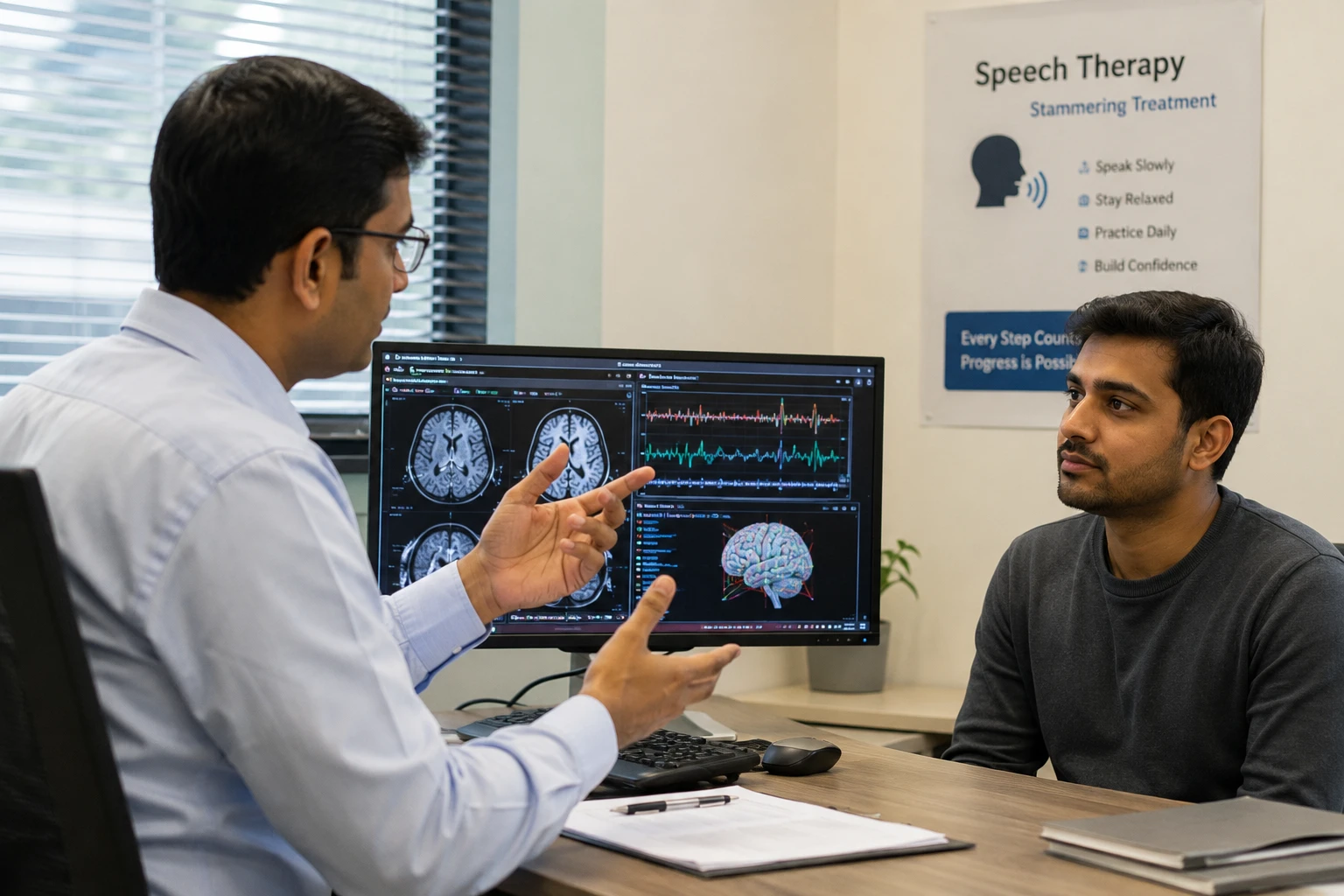
Researchers use brain imaging and other scientific methods to study how speech-related areas function. These studies can help researchers understand differences in speech production and how people who stammer may process speaking differently in certain situations.
This does not mean that stammering can simply be “seen” in a brain scan or that one particular brain area is responsible for it. Human communication is far more complicated than that.
But better understanding can lead to better questions.
And better questions can eventually lead to better treatment.
Artificial Intelligence and Speech Technology
AI is changing many areas of our lives, and speech research is also being influenced by new technology.
One possible future application is intelligent speech analysis. Imagine a tool that can listen to a person’s speech during practice and provide useful information about pauses, repetitions, speaking speed or other speech characteristics.
Such technology could potentially help a person and their therapist understand patterns that are difficult to notice during a normal conversation.
For example, someone might believe that they stammer equally in every situation. But after tracking their speech across different environments, they may discover that their speech changes significantly when talking to strangers, speaking on the phone or presenting in front of a group.
This type of information could support more personalised therapy.
However, technology should remain a tool, not a replacement for human understanding. A computer can analyse sound, but it cannot fully understand what a person feels when they are sitting in a meeting and worrying about speaking.
That emotional and human side of communication will always matter.
Virtual Speech Therapy Could Become More Accessible
Another major area of innovation is online and remote therapy.
Even today, people can connect with speech professionals from home using video calls. This can be especially useful for people who live far away from specialised services or have difficulty travelling regularly.
In the future, remote therapy may become even more interactive.
Virtual reality, speech-analysis software and interactive exercises could potentially create realistic speaking environments. A person might practise introducing themselves, ordering something at a restaurant, answering interview questions or speaking in a meeting-like environment.
For someone who has spent years avoiding these situations, practising them gradually in a supportive environment could be valuable.
The idea isn’t to create a perfect virtual world. The purpose would be to help a person become more comfortable communicating in situations that currently create pressure.
Virtual Reality and Real-Life Speaking Situations
Think about a person preparing for a job interview.
The interview is still two weeks away, but they are already nervous. They start imagining every possible problem. “What if I get stuck while introducing myself?” “What if the interviewer notices?” “What if I can’t answer quickly?”
A future virtual reality program could potentially allow that person to practise the interview environment before the actual day.
They could answer questions, experience pauses and gradually become more familiar with the situation.
This kind of practice may help reduce the feeling that the situation is completely unknown.
Of course, virtual practice cannot perfectly reproduce a real conversation. Real people are unpredictable. They react, interrupt, smile, look serious and ask unexpected questions. But technology can still provide an additional practice environment.
More Personalised Therapy
One of the biggest possibilities in future stammering treatment is personalisation.
Right now, people sometimes look for one universal technique. They ask, “Which exercise will cure my stammering?” But stammering doesn’t work that way.
Two people can have very different experiences.
One person may stammer more when speaking quickly. Another may struggle mainly during stressful conversations. Someone else may speak comfortably with family but experience significant difficulty in professional situations.
Their goals may also be different.
One person wants to feel comfortable giving presentations. Another simply wants to talk on the phone without fear. Someone else wants to participate more actively in social conversations.
Future research may help therapists create treatment plans that are even more closely matched to these individual patterns and goals.
This is one reason why the future of stammering treatment should not only focus on fluency. It should also focus on confidence, communication, participation and quality of life.
The Emotional Side Cannot Be Ignored
There is an important part of stammering that technology alone cannot solve.
Fear.
Many people who stammer have experienced teasing, impatience, embarrassment or uncomfortable reactions from other people. After years of such experiences, speaking can become emotionally difficult.
A person may start thinking about every word before saying it.
They may avoid certain words.
They may change sentences.
They may stay silent even when they have something important to say.
So even if future technology becomes extremely advanced, successful support will still need to consider the person’s emotional experience.
A person should not feel that they have to become perfectly fluent before they can participate in life.
Confidence is not always the absence of stammering. Sometimes confidence means being willing to speak even when some stammering may happen.
Could There Be a Medicine for Stammering?
This is a question many people naturally ask.
Researchers have explored the biological and neurological aspects of stammering, including possible connections with brain chemistry and genetics. These areas can help scientists understand why stammering occurs and how it may develop.
However, people should be careful about online claims promising a simple medicine or guaranteed cure.
There is currently no universally accepted medication that simply removes developmental stammering for everyone.
Future research may explore biological treatments further, but this is an area where scientific evidence matters enormously. A treatment needs to be properly studied for effectiveness and safety before it becomes part of normal care.
So if you see a website promising a “100% permanent cure” through a tablet, device or secret technique, take a step back and check the evidence.
Hope is important, but informed hope is better.
Genetics and the Future of Research
Genetics is another fascinating area.
Research suggests that genetics can play a role in developmental stammering. This does not mean that one single gene determines whether someone will stammer. Human development is much more complicated.
But understanding genetic influences may help researchers learn more about why some people develop persistent stammering while others experience changes as they grow.
In the future, better knowledge in this area could potentially contribute to earlier identification and more personalised support.
Again, this is research, not a promise of a future cure.
Science needs time.
Wearable Devices and Smart Feedback
Technology is also becoming smaller and more personal.
Smartphones, watches and other wearable devices can already collect enormous amounts of information about our daily activities. Speech technology may eventually become more integrated into these devices as well.
A future speech-support tool could potentially provide feedback during practice sessions or help users track changes over time.
Imagine completing a five-minute speaking exercise every day and having an app show you patterns from your practice. Instead of simply saying “good” or “bad,” the system could help you notice changes in speaking pace, pauses or other measurable features.
For some people, this kind of feedback could make practice more engaging.
But once again, the technology should support the person rather than make them feel constantly monitored.
Speech is communication, not a performance score.
What Will Never Change
Even with all these innovations, one thing will remain important: the person.
A future device may analyse speech more accurately. AI may become better at recognising patterns. Online therapy may become more interactive. Research may reveal more about the brain.
But behind every speech pattern is a human being.
Someone with dreams.
Someone with fears.
Someone who wants to be listened to.
Someone who may have stayed quiet for years because they were afraid of being judged.
That is why future treatments should not only ask, “How can we make speech more fluent?”
They should also ask, “How can we help this person communicate with greater freedom and confidence?”
That is a much bigger question.
What You Can Do Today
It is exciting to think about future research, but you don’t have to wait for a new invention before starting your journey.
There are already established approaches that can help people understand and manage their communication. Working with a qualified speech professional, practising regularly, becoming more comfortable with speaking situations and learning about your own communication patterns can all be meaningful steps.
You can also educate yourself through reliable resources and real experiences.
StammeringCare.com is one place where people can learn more about stammering, speech confidence and practical approaches to communication. The more you understand your speech, the easier it can become to move away from fear and toward informed action.
You can also explore the Stammering Coach’s videos on YouTube for additional guidance and conversations around stammering: Stammering Coach YouTube Videos.
Sometimes the first step isn’t changing your speech.
Sometimes the first step is simply understanding it.
A Future With More Understanding
Perhaps the most positive change we can hope for is not only better treatment, but better understanding.
A world where teachers know how to respond when a child stammers.
A workplace where employees aren’t judged by speaking speed.
A family that listens patiently instead of completing someone’s sentences.
A society where stammering isn’t treated as something embarrassing.
These changes can happen alongside medical and technological research.
Because treatment is only one part of the picture.
Acceptance matters too.
When people are given time to speak, when listeners maintain eye contact and when nobody rushes to finish their sentence, communication becomes easier and more respectful.
Hope Without Unrealistic Promises
The future of stammering treatment is interesting because research is moving in many directions. Brain research, speech technology, AI, remote therapy, virtual environments and personalised approaches may all contribute to better support in the years ahead.
But we should keep our expectations balanced.
Future treatments for stammering may become more personalised and innovative, but no responsible professional should promise that one new technology will work for every person.
Progress in science is usually gradual.
And that is okay.
We don’t need to know exactly what treatment will look like ten or twenty years from now to have hope today.
Maybe the future will bring tools that help therapists understand speech more deeply. Maybe technology will make specialised support available to more people. Maybe research will uncover new information about the brain and genetics. Maybe several small innovations will eventually work together to create much better treatment experiences.
We simply don’t know yet.
But we do know that research continues.
And we do know that people who stammer deserve support, respect and opportunities to communicate without shame.
So if you are currently struggling with stammering, don’t put your entire life on hold waiting for the next scientific breakthrough.
Work with what is available today.
Take small steps.
Learn about your speech.
Practise communication.
Build confidence.
And stay hopeful about tomorrow.
Because the future of stammering treatment isn’t only about finding a way to change speech. It is about creating a future where people who stammer can speak, participate, work, connect and live their lives with greater freedom and far less fear.


