
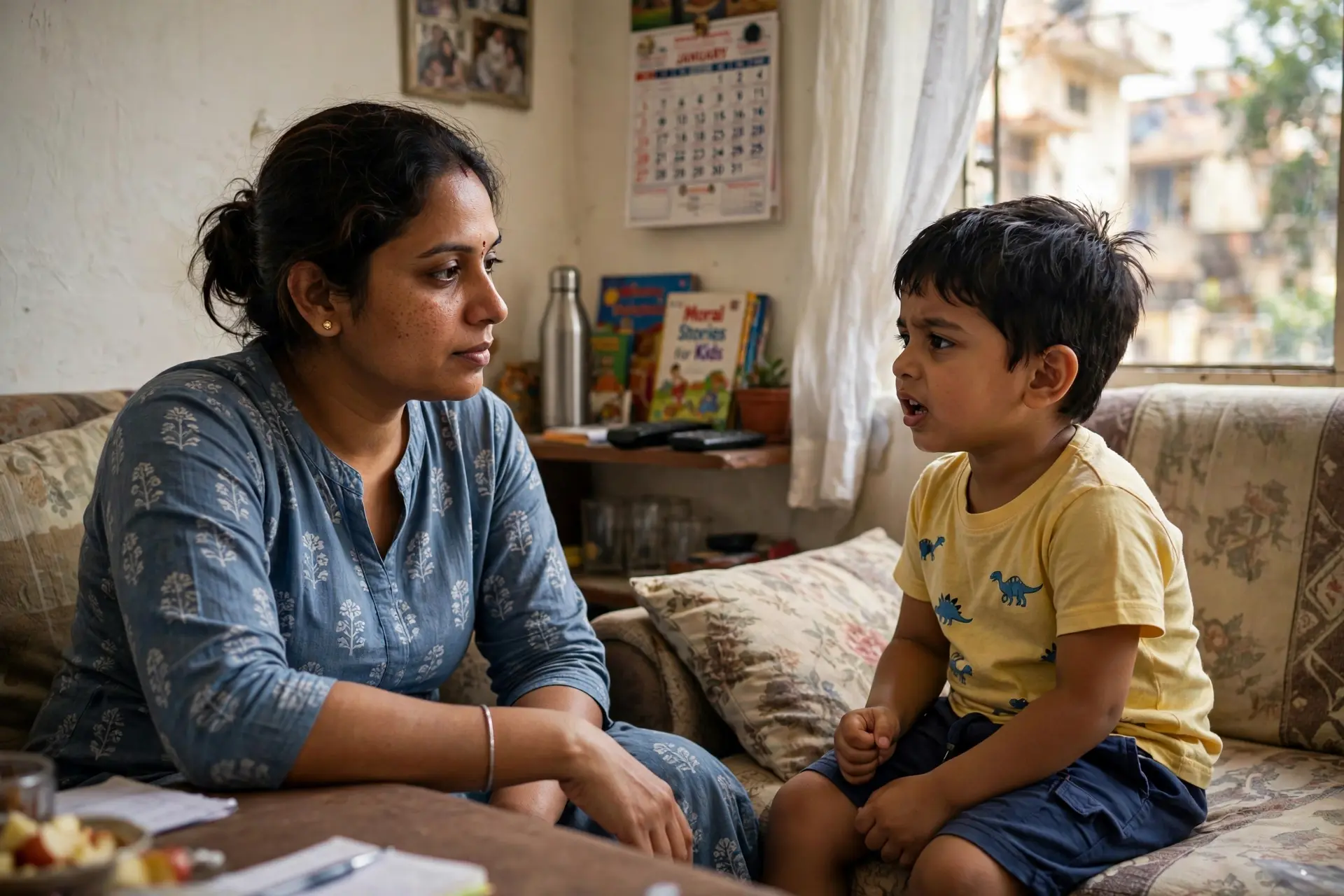
Stuttering in Children: When to Worry and When to Relax
There is a moment almost every parent remembers. Your child is happily telling you a story, talking about school, a cartoon, a toy or something that happened that day. Suddenly, the words don’t come out smoothly. Maybe the child repeats a sound, pauses in the middle of a sentence or says a word more than once. As a parent, your mind can immediately start running. “Why is this happening?” “Is my child stuttering?” “Will it become permanent?” “Should I see someone?”
If you have had these thoughts, first take a breath. You are not a bad parent for worrying. In fact, noticing changes in your child’s speech simply means you are paying attention.
Stuttering can be confusing, especially when it appears during the early years when children are learning new words and building longer sentences. Many young children have periods of disfluent speech while their language skills are developing, and not every repetition or pause means that a child has a persistent stuttering problem. At the same time, there are situations where getting professional guidance early can be helpful.
That is why understanding stuttering in children: when to worry and when to relax can help parents respond with more patience instead of immediately becoming scared.
Understanding What Childhood Stuttering Actually Looks Like
Stuttering can include repeating sounds, syllables or words, stretching a sound, or getting stuck before a word comes out. A child may say a sound more than once, stretch a sound, or experience what is sometimes called a block, where the child seems to know what they want to say but the word does not come out easily.
For parents, these moments can look quite alarming. But young children can also have ordinary periods of disfluency while their speech and language skills are developing.
Imagine a three-year-old who suddenly has so much to say. They have learned new words, their sentences are getting longer and their thoughts are moving quickly. Sometimes the child may start a sentence, change their mind, add another idea and then continue. There can be repetitions and pauses along the way.
It doesn’t automatically mean something is seriously wrong.
According to the National Institute on Deafness and Other Communication Disorders, developmental stuttering most often occurs in young children while speech and language skills are developing, and many children eventually stop stuttering.
This is one reason parents should avoid jumping to conclusions after noticing a few disfluent moments.
When You Can Relax a Little
One of the hardest things for a parent is knowing whether to simply observe or immediately seek help.
If your child occasionally repeats a word or sound but continues communicating happily, is not upset about speaking, and there are no other concerns about communication development, you don’t necessarily need to panic.
Children can have periods where their speech becomes less smooth and then becomes smoother again. Stuttering can also vary from one situation to another. A child may sound more fluent one day and less fluent another day.
Think about how adults speak when they are excited. We sometimes repeat ourselves, change sentences halfway through, say “um,” pause, or restart a sentence. Children can have even more variation because they are still learning how to organise language.
So, the first step is not to stare at every word your child says.
Listen to the message.
What is your child trying to tell you?
Are they enjoying the conversation?
Are they still asking questions and telling stories?
Are they comfortable talking to you?
These things matter too.
When parents constantly watch the child’s speech, the child may begin to notice that something about their talking is being judged. That can make communication feel stressful.
When Should Parents Start Paying More Attention?
There are some signs that deserve closer attention.
If stuttering continues for several months, becomes more frequent, or appears to be getting stronger, it is reasonable to speak with a speech-language pathologist. NIDCD notes that professionals generally recommend evaluation when a child has been stuttering for around three to six months, particularly when there are other risk factors or concerns.
A family history of stuttering is also something worth mentioning to a professional because genetics can play a role in developmental stuttering.
Another thing parents can notice is how the child reacts while speaking.
For example, does the child appear to struggle to get a word out? Are there visible signs of tension while talking? Does the child become upset or avoid speaking? Does the child say things like “I can’t talk” or show frustration because words are not coming out?
These reactions are important because stuttering is not only about how many repetitions a child produces. The child’s experience and attitude toward communication also matter.
ASHA recommends professional assessment when stuttering is suspected, especially when there is concern from the parent or child, a family history of stuttering, or negative reactions associated with the child’s speech.
Don’t Tell Your Child to “Slow Down”
This is one of the most common things adults say when a child is struggling with speech.
“Slow down.”
“Take a breath.”
“Start again.”
“Think before you speak.”
Parents usually say these things with good intentions. They want to help.
But constantly correcting the way a child speaks can make the child more aware of their speech and may create extra pressure during communication.
Instead, give your child enough time to finish what they want to say.
If your child takes a little longer, wait.
It can feel difficult at first, especially when you already know what the child is trying to say. You may feel tempted to finish the sentence for them.
Try not to.
Let the child complete the thought.
ASHA and NIDCD both recommend giving children time to communicate, listening attentively and avoiding interruptions or completing their sentences.
That small change at home can make conversations feel much safer for a child.
Focus on What Your Child Is Saying
Imagine your child comes running to you and says, “M-m-mummy, I saw a big dog!”
If your immediate reaction is, “Don’t stutter, say it slowly,” the child’s attention moves from the exciting story to their speech.
But if you respond, “Really? Where did you see the big dog?” the conversation stays about the child’s experience.
That is a much more comfortable communication environment.
Your child wants to share something with you. Listen to the story, not only to the speech pattern.
This doesn’t mean you should ignore genuine concerns. It simply means that your child should not feel that every conversation is a speech test.
What About Excitement and Fast Talking?
Parents often notice that their child’s stuttering seems stronger when the child is excited.
That can happen.
A child may have a lot of thoughts and want to say everything quickly. Their language can move faster than their ability to organise the sentence and produce it smoothly.
Instead of telling the child repeatedly to “slow down,” parents can create a generally relaxed communication environment. Speak comfortably yourself, allow pauses and don’t rush the child to finish.
NIDCD notes that parents may be encouraged to speak in a slightly slower and relaxed manner and create a home environment where the child has comfortable opportunities to talk.
You don’t need to speak unnaturally slowly. Just model calm communication.
Should You Talk to Your Child About Stuttering?
Some parents are afraid to even use the word “stuttering.”
They worry that talking about it will make the child think something is wrong.
But if the child brings it up, there is no need to pretend it doesn’t exist.
You can respond calmly.
You might say something simple like, “Sometimes words get stuck. That’s okay. Take your time. I’m listening.”
The exact words aren’t important. Your attitude is.
The child needs to understand that communication is still okay even when speech isn’t perfectly smooth.
NIDCD specifically notes that parents can talk openly and honestly with children about stuttering when the child brings up the subject.
When Professional Help Can Give You Peace of Mind
Sometimes parents hesitate to consult a speech-language pathologist because they think, “Maybe it will disappear on its own.”
And sometimes it may.
But getting an evaluation does not automatically mean your child will need therapy.
This is an important point.
An evaluation can simply help you understand what is happening. A speech-language pathologist can look at the child’s speech, language development, history and communication behaviour and help determine whether monitoring is appropriate or whether support would be useful.
In other words, you don’t have to wait until you are extremely worried.
If something about your child’s speech is bothering you, asking a qualified professional can give you clearer information.
ASHA also notes that early identification and support can be valuable when communication concerns are present.
What Parents Should Avoid Doing
There is no need to turn your home into a speech therapy classroom.
Your child should still be able to joke, play, tell stories, ask questions and talk about completely random things without feeling that every sentence is being analysed.
Avoid correcting every repetition.
Avoid asking the child to repeat the sentence again and again.
Avoid showing frustration when the child is taking longer.
Avoid finishing every sentence.
And try not to make facial expressions that suggest something went wrong when the child stutters.
Children notice much more than we realise.
A small reaction from a parent can sometimes communicate, “Something is wrong with the way you talk,” even when the parent never says those words.
Instead, show the child that you have time.
You are listening.
The conversation is more important than perfect fluency.
Stuttering in Children: When to Worry and When to Relax
The real challenge for parents is finding the balance between ignoring a genuine concern and worrying unnecessarily about normal speech development.
If your child occasionally repeats sounds or words, remains comfortable communicating and shows no other concerning signs, there may be no reason to panic. Young children can experience periods of disfluency as their speech and language skills develop.
But if the stuttering persists, appears to be increasing, involves noticeable struggle, causes distress or avoidance, or there is a family history of stuttering, talking with a speech-language pathologist is a sensible next step.
You don’t have to diagnose your child yourself.
You just have to notice, listen and seek guidance when you need it.
Give Your Child Time to Grow
Sometimes what a parent needs most is reassurance.
Your child’s speech doesn’t need to be perfect.
Your child doesn’t need to finish every sentence quickly.
Your child doesn’t need to speak like an adult.
They are learning.
Every day they are learning new words, new sentence structures and new ways of expressing their thoughts. There can be bumps along the way.
What matters is creating an environment where your child feels safe to communicate.
Talk during meals. Ask about their day. Read stories together. Let them tell you long, funny and completely unnecessary stories about what happened with their toys. Those conversations are valuable.
And when your child talks, listen.
Really listen.
If you are concerned about your child’s speech or stuttering, you can also explore educational resources on StammeringCare.com, where parents and individuals can learn more about stammering, fluency and communication.
For additional practical videos and guidance, you can visit the Stammering Coach YouTube channel here: Stammering Coach YouTube Channel
A Final Thought for Parents
Learning about stuttering in children: when to worry and when to relax is not about finding one perfect answer that applies to every child.
Every child is different.
Some children may go through a temporary period of disfluency. Others may benefit from an evaluation and professional support. The important thing is not to panic, but also not to ignore concerns that continue or affect the child’s confidence and communication.
If your child stutters, remember that your reaction can make a difference.
Give them time.
Listen without rushing.
Don’t finish their sentences.
Don’t make them feel that they need to speak perfectly.
And if you’re concerned, speak with a qualified speech-language professional rather than trying to figure everything out alone.
Sometimes a parent spends weeks worrying about every repetition, only to discover that the child is developing normally. Sometimes an evaluation identifies something that deserves attention, and getting that guidance early can make the next steps clearer.
Either way, information is better than fear.
Your child needs a parent who listens, not a parent who counts every repeated sound.
So take a breath, slow the conversation down naturally, and give your child the space to speak.
Because before children need perfect speech, they need to know that their voice matters.


